|
This Website is dedicated to the total WWII Experience, more specifically with what happened at Kingman, Arizona during the Forties, the People who lived there, the Thousands who trained there, the remarkable Few with the foresight to save and/or record this precious History and last, but definitely not least, those magnificent AIRPLANES and their gallant CREWS... |
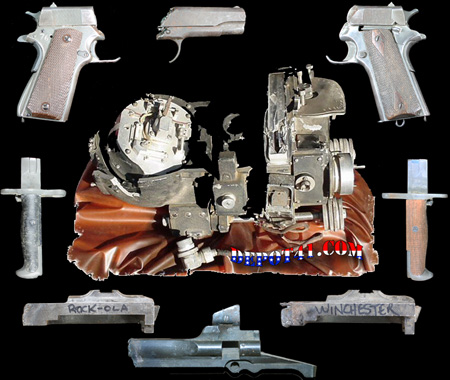
Surviving Artifacts from Kingman Army Air Field:
& Sales-Storage Depot No. 41 Planes:
Our eager staff: Mr Boots - Office Manager & Shaggy - Shop Foreman
(Two of our 17 rescue animals)
|
Page(s) updated March 2025
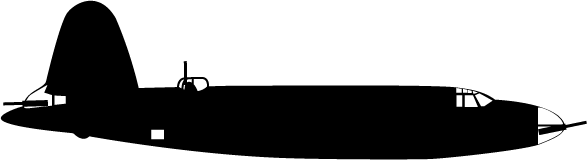
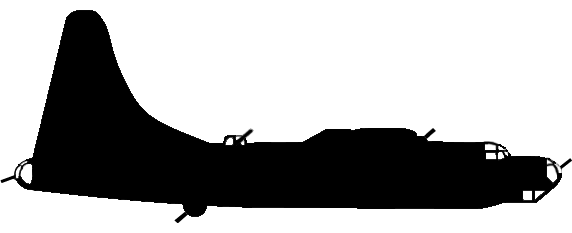
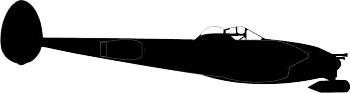
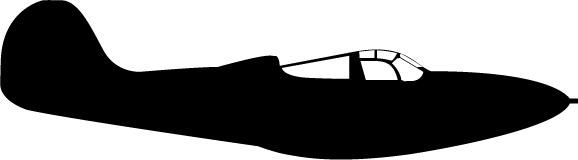
Kingman Army Air Field, Arizona With imminent U.S. involvement in World War 2 speeding things up, the site for a U. S. Army Air Force gunnery school in northwestern Arizona was chosen late in 1941 and construction began mid-1942. Military operations officially began mere months later and by early 1943, eager students were already in classes. While there were peripheral training operations carried out during KAAF's less-than-4-year lifespan, it's main focus was that of training flexible aerial gunners: men who physically operated bomber's swivel-mounted machine guns or power operated turrets such as the Bendix models, the Consolidateds, the Emerson, the Martin, as well as the upper and lower Sperrys. From 1943 through 1945, trainees by the tens of thousands streamed through Kingman and after 7 weeks of intense classroom studies, various types of ground firing, then exciting aerial training, successful students then had Gunner's Wings pinned on their proud chests. Now, their next assignments were posted; some of these graduates became instructors themselves, while most were sent to various combat theaters where .50 caliber bullets really began spitting from hot barrels.... - Fast forward to late 1945 - The War in Europe over in May, hundreds upon hundreds of battle-weary bombers each month started arriving stateside, and they were crowded into temporary holding areas across the country with the intent of being refurbished for possible deployment to the still very active War in the Pacific. However, after the second & third atomic explosions and the welcomed Japanese surrender in August, the rebuilds were cancelled and those ships were instead flown to different storage depots where their status for reuse, resale and/or salvage would be evaluated. Kingman Army Air Field was the recipient of several thousand returned combat aircraft - as well as quite a few trainers and even some factory new ships, making it one of the top three depots in the nation, and once Kingman's military training operation ceased to exist in 1946, it officially became known as SALES-STORAGE DEPOT No. 41 ...Only one of perhaps a dozen Stateside aircraft storage-turned-salvage facilities, scores of bombers, fighters and a handful of trainers began darkening the skies over Kingman, upwards of 100 per day, making what would be for most their final flight and landing. Once signed over to the War Assets Corporation, crews stripped loose equipment from the planes; try to imagine the ramp strewn with piles of seat cushions, manuals, sextants, Load Adjusters, first aid kits, fire extinguishers, flare guns, survival gear... pretty much any and all of the loose equipment inside the aircraft. With that preliminary task out of the way, workers then taxied the doomed aircraft off into the surrounding desert and their assigned parking areas, mag switches were flipped and propellers wound down one last time: sleek P-38 Lightnings, P-39 Airacobras, P-40 Warhawks, P-47 Thunderbolts, P-63 Kingcobras, A-20 Havocs and A-26 Invaders; battle-scarred B-17 Flying Fortresses and B-24 Liberators from all Theaters of Combat; rugged B-25 Mitchells and B-26 Marauders; gigantic & rare B-32 Dominators... only months before the noble vanguards of America's great pride, strength & determination, now ironically about to be reduced to mere cold aluminum ingots in a staggering proportions... Few planes made it out of Kingman intact (some Lightnings, a couple of dozen Invaders and a famous B-17D named THE SWOOSE, to list a few), but for the thousands of forsaken ones, their time was up.
USAAF planes performed exceedingly well and WWII - the reason for their very existence in the first place - had been won. Technology's rapid advancement during less than four years of war had aged the majority of these planes to dinosaurs; think about it... the majority of them had existed less than even a decade - and they now offered little in practical use. That, coupled with pressure on elected officials by panicked aircraft manufacturers to eliminate a perceived threat to the industry's very existence played major rolls in the decision to transform SALES-STORAGE DEPOT No. 41 into one of the nation's largest and arguably the world's most infamous aircraft graveyards. Turning Swords into Plowshares . . .
. . . is perfectly understandable, especially considering everything the World went through during those violent and costly years. But the nagging question remains: for History's sake, why weren't more than only a meager few of these metallic War Heroes saved? After all, there were thousands upon thousands of available bombers & fighters here in the States after the War... For a ridiculously small amount of money & labor, there could have been hundreds of tangible reminders of what the country, as well as the rest of the world had endured during the first half of the Forties. That was not to be, for within a few short years after WWII, nearly all the planes that were cherished by their crews and had been instrumental in winning that War were quickly & efficiently destroyed. Enter the new DEPOT 41 Saving History for future generations might be an expensive chore, but saving History while it's still around is easier than trying to bring it back after it's been destroyed. ~ JCS
For nearly 40 years it's been my constant and all-consuming goal, a labor of love if you will, to acquire, identify and preserve any and all available photos, information & artifacts from both the Army Air Field and the thousands of USAAF planes at Kingman. Blessed with a patient & understanding wife and owing to many generous, kindhearted people (some who graciously opened their homes and lives to me and my projects) and without whose friendship, encouragement and help, little of what I'm trying to accomplish would even be possible, the photograph collection and TONS of objects that have been gathered these past 3+ decades are going to be used for 1) publishing one or more books and 2) creating a museum dealing with this captivating subject ... All in a very personal attempt to honor and preserve the memories of what happened during WWII, including the people who were involved and those thousands of fantastic aircraft, as accurate as humanly possible. THE SUBJECT DESERVES NO LESS. In the meantime, I've spent many hours creating this website and the Pages linked in the left column will provide a glimpse at some of the rare & valuable treasures in the DEPOT 41 Museum Collection, some that are destined for the museum and others that are offered for sale or trade. ENJOY!
Keep checking back for changes and updates...
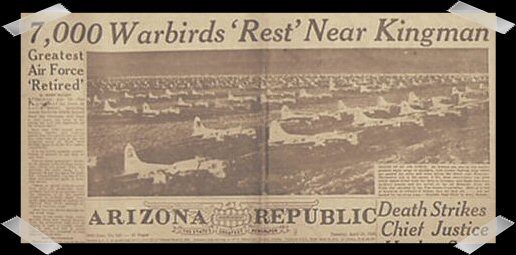
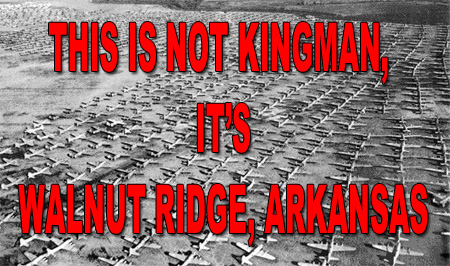
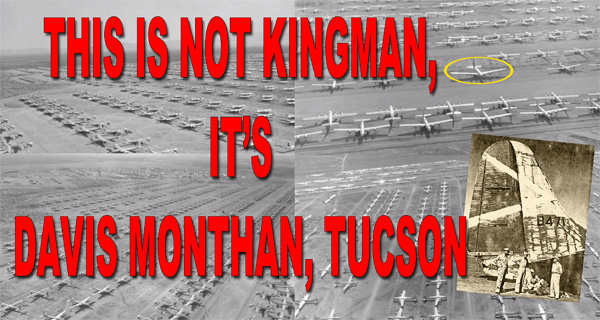
With the final count being closer to 5500, this inflated post-War headline is one source for the continued myth that Kingman had far more planes than it actually did. Other myths, possibly caused by the Flying Fortresses' close proximity to Route 66 and easy access for photography, were: "there were only B-17s at Kingman" or "there were more B-17s than B-24s at Kingman" BOTH OF WHICH ARE INCORRECT Furthermore, there is quite a bit of other erroneous Kingman information in print as well as spread across the Internet, such as this image on Wikipedia labeled as Kingman:
And these stills from a Kingman YouTube video:
Nestled amongst scores of Superfortresses, the yellow circled plane is the one-and-only Douglas B-19 that was salvaged at DM, along with several other noteworthy aircraft, including what was then the sole surviving B-32 Dominator. Keeping History Straight - JCS
|
|
NOTICE: The land encompassing Kingman's airport is not public property. Any person(s) seeking access should first obtain permission from the appropriate authorities. |
© 2007 - 2025 Depot 41 All Rights Reserved